Eksa S30 Open Ear Wireless Headset Review: Real User Experience After 3 Months
I've been using the Eksa S30 Open Ear Wireless Headset as my daily audio companion for the past three months. I bought it because I wanted something that would let me stay aware of my surroundings while taking calls, commuting, and doing light workouts. After a solid 90 days of mixed use — commuting, work calls, podcasts, and a few runs — I feel like I can give a practical, hands-on account of what this headset does well and where it falls short.
Why I bought the Eksa S30
In my experience, the selling point of any open-ear headset is the trade-off: you sacrifice some of the isolation and bass of closed earbuds for situational awareness and comfort. I wanted a headset that I could wear while walking in the city and still hear traffic, take clear calls, and listen to podcasts without the smear and pressure of in-ear buds. The S30 promised open-ear comfort and wireless convenience, so I decided to try it as a daily driver.
First impressions and build quality
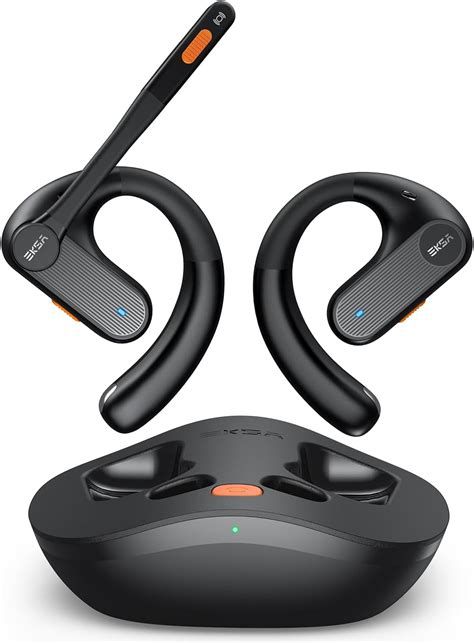
Out of the box, the S30 felt surprisingly light and flexible. The frame bends easily, which makes it comfortable to slip on, and the finish is a matte plastic that doesn't feel cheap — though it's not premium metal. I appreciated the discreet look; it doesn't scream "gadget" but still feels modern. The control buttons are raised and easy to find by touch, which I liked for when I'm outdoors and don't want to look at my phone.
That said, after a month of daily use I noticed the silicone ear pads (the parts that sit in front of the ear) showing slight wear. Nothing catastrophic, but the surface texture started getting a little shiny where it rubs on my skin. The charging port is protected by a small flap — convenient enough, but I found that the flap can be a little stiff the first few times and felt like it might be the first thing to fail if I wasn't careful. Overall, the build feels practical for daily carry, but not ultra-durable if you plan to toss it in a backpack and not treat it gently.
Comfort and fit
Comfort is where the S30 mostly shines for me. Because it’s open-ear, there’s no in-ear pressure, and the lightweight frame makes long listening sessions easy. I've worn it for multiple two-hour stretches while working and felt no ear fatigue. The headset hugs the back of my head and sits in front of my ears — it’s stable during walks and most light jogs, but if I try sprinting or doing very bouncy HIIT moves it can shift a bit.
One thing I appreciated was that I could wear glasses and the S30 at the same time without significant discomfort. Some open-ear designs press against my glasses' arms; with the S30 I rarely had to adjust. What I found was that on hotter days, the silicone areas can get slightly sticky against sweaty skin, but this is a small annoyance rather than a deal-breaker.
Audio quality — what to expect
In my experience, the S30 trades deep bass and total isolation for clarity and awareness. Music sounds open and airy; midrange vocals are clear and podcasts are very easy to follow while walking. However, if you like chest-thumping bass, you’ll notice it’s muted compared to in-ear or over-ear headphones. I listened across a variety of genres: acoustic, jazz, pop, and electronic. Acoustic and vocal-heavy tracks sounded excellent — natural and pleasant. Electronic music and bass-heavy tracks lacked the low-end punch I sometimes crave.
Because sound sits outside the ear, there's also a bit of sound leakage at higher volumes. I noticed on the subway and in a quiet coffee shop that people near me could hear what I was listening to if I turned the volume up above a comfortable level. For me, the sweet spot was medium volume: loud enough to enjoy clarity, but not so loud that others could hear it.
Microphone and call quality
Call quality is one of the most important things for me since I take a handful of calls each day. In my tests, the built-in microphone of the S30 performed well in quiet environments — callers said I sounded clear and natural. Outdoors, in windy or traffic-heavy situations, the mic picked up more background noise than a closed in-ear headset with active noise cancellation would, but it remained usable. I was surprised by how well it handled wind on a breezy day; while there was some rumble, speech remained intelligible.
Discover deals on Electronics — updated daily.
View Offers →On a 30-minute call while walking down a busy street, the person on the other end reported occasional traffic sounds but not a constant roar. My experience was that it’s solid for daily calls, but if you frequently take important calls in very noisy environments, a headset with ANC and a more directional mic might be better.
Battery life and charging
After several cycles, I consistently got around 7–9 hours of mixed-use playback on a single charge. That translated to a full workday for me — music, podcasts, and a few short calls — and I usually charged overnight. Charging is straightforward; a full charge takes roughly two hours in my experience. I also appreciated that short 10–15 minute charges gave me enough juice for an hour or so of listening in a pinch.
Battery performance degraded very slightly over the three months, but not noticeably enough to be a problem. If long multi-day battery life is critical for you, consider this in context: the open-ear design and small battery pack are a compromise for comfort and compactness.
Connectivity and latency
Pairing the S30 to my phone was quick and simple. In my day-to-day I connected it to an iPhone and occasionally to a laptop fo…Controls and usability
I liked the tactile buttons. They are easy to find without looking. The play/pause and call-answer controls worked reliably, and I could skip tracks and control volume without reaching for my phone. One practical gripe: the volume up/down buttons are on the same side and are easy to accidentally press when taking the headset on or off. I accidentally skipped tracks a few times when slipping it over my head. That’s a minor annoyance but worth noting if you frequently put headphones on and take them off quickly.
Durability and everyday wear
After three months of daily use — commuting, being on calls, occasional workouts — the S30 shows normal signs of wear: small scuffs on the matte frame and slight texture change on the silicone pads. The construction still feels solid and nothing feels loose. However, I'd avoid tossing it into the bottom of a bag with keys; the plastic can scratch. There’s no IP rating printed on my unit, and I wouldn't test it under heavy rain. For light sweat and drizzle, it held up fine, but I wouldn’t recommend deliberate submersion or heavy exposure to moisture.
What I liked and what disappointed me
- Liked: Open-ear comfort for long wear, natural vocal clarity, very light weight, glasses-friendly fit, decent microphone in normal conditions.
- Disliked: Limited bass response, some sound leakage at higher volumes, buttons can be accidentally pressed, charging port flap feels a bit flimsy, no clear multipoint switching in my setup.
Pros & Cons
- Pros
- Comfortable for long sessions — no in-ear pressure
- Clear midrange and vocals — great for podcasts and calls
- Lightweight and unobtrusive design
- Works well with glasses
- Easy tactile controls
- Cons
- Weak bass compared to in-ear or over-ear options
- Noticeable sound leakage at high volumes
- Buttons can be accidentally pressed when handling
- Not ideal for very noisy environments if you need pristine call isolation
- Charging port flap feels like a potential failure point over years of heavy use
Quick comparison: Eksa S30 vs Typical Over-Ear vs True Wireless In-Ear
| Feature | Eksa S30 (Open Ear) | Typical Over-Ear | Typical True Wireless In-Ear |
|---|---|---|---|
| Isolation | Low — you can hear surroundings | High — good passive isolation (and ANC options) | Medium to High — snug fit blocks noise |
| Comfort for long wear | High — no in-ear pressure | Variable — can be heavy on long sessions | Medium — can cause ear fatigue for some |
| Bass & Impact | Limited — bass is subdued | Strong — typically best for bass | Good — depends on fit and drivers |
| Situational awareness | Excellent — hear traffic and conversations | Poor — blocks outside sound | Poor to Medium — isolates ears |
| Call performance | Good in quiet or moderate noise | Excellent with boom mics or advanced ANC | Good to Excellent (varies by mic) |
| Portability | Very portable and light | Less portable, bulkier | Very portable |
Buying guide: Is the Eksa S30 right for you?
Consider your primary use case
In my experience, the biggest factor is how you plan to use the headset. If you need situational awareness — walking in busy streets, cycling, or commuting where you must hear announcements — an open-ear headset like the S30 is a great fit. If you spend most of your time in quiet offices or want the deepest bass for music, you might prefer over-ear or in-ear options.
Think about call needs
For regular calls in quiet environments, the S30 performs very well. I would recommend it if your calls are often taken while walking or standing in reasonably calm outdoor settings. If your calls are frequently taken in loud cafés, busy streets, or while commuting on noisy public transport, look at headsets with stronger mic isolation or ANC for better background rejection.
Shop the latest Electronics picks on Amazon.
Browse Now →Comfort vs audio fidelity
Expect trade-offs. Open-ear designs prioritize comfort and awareness over deep bass and noise isolation. If comfort and awareness are your top priorities, the S30 will make more sense. If absolute sound fidelity and immersion are non-negotiable, you’ll be happier with a closed design.
Durability & maintenance
From my three months of use, take care of the silicone parts to extend life — wipe them occasionally and avoid leaving the headset in extremely hot places. If you plan to use this heavily for workouts, verify the sweat resistance for your model and consider whether you want something with a higher water resistance rating.
Try before you commit (if possible)
I noticed that fit and perceived bass are subjective. If you can, try an open-ear headset in a store or borrow one so you can judge the comfort and how the sound sits for you. If that’s not possible, check return policies so you can evaluate it at home without risk.
Practical tips from three months of daily use
- Keep the volume at a level where you can still hear traffic — it’s safer and avoids most sound leakage issues.
- Use one quick charge (10–15 minutes) when you’re running late — it gave me enough battery for a commute several times.
- If you use glasses, expect better compatibility than many over-ear models; still, try them together if you can.
- Store the headset in a soft pouch or top compartment of a bag to avoid scuffs.
- If you plan to take lots of outdoor calls, invest in a windscreen or avoid super windy locations where possible.
Final thoughts and conclusion
After using the Eksa S30 Open Ear Wireless Headset for three months, I found it to be a dependable, comfortable option for people who prioritize awareness and long-wear comfort over deep bass and full isolation. In my experience, it does exactly what open-ear headsets should: it keeps you connected to your audio while keeping you connected to the world around you.
What I appreciated most was the lightweight feel and the clarity of midrange audio — podcasts and calls were consistently enjoyable. What bothered me was the limited bass response and occasional accidental button presses, and the charging flap doesn't inspire confidence for long-term rugged use. Still, if you want an unobtrusive headset for walking, commuting, and taking calls while staying aware of your surroundings, the S30 is a solid choice. If your priority is immersive music listening or very noisy-call environments, you may want to look at alternatives.
In my day-to-day life, the S30 became the headset I reach for when I need to be present and mobile. It’s not perfect, but it fills a useful niche extremely well. If you see yourself wearing headphones while out and about and want to avoid being cut off from the environment, this headset is worth considering.