Motorola Edge 70 vs Dji Osmo Mobile 8: Which Should You Buy?
Short answer from my experience: If you need a better daily driver and a solid, all-around camera phone, the Motorola Edge 70 is the item to buy. If your main goal is to create smooth, cinematic mobile video, the DJI Osmo Mobile 8 will transform your footage far more than swapping phones alone. I bought and used both for several months and I’ll explain when one makes more sense than the other — and when you actually want both.
Introduction — why this comparison even makes sense
When I started taking mobile video more seriously I faced the same decision a lot of content creators do: upgrade my phone to get better in-camera stabilization and low-light performance, or invest in a dedicated gimbal to smooth the footage I already capture? I ended up buying a Motorola Edge 70 as my daily phone and a DJI Osmo Mobile 8 to see how they behaved together and separately. After months of commuting shots, weekend trips, handheld vlogs, and short-form social clips, here’s what I learned.
How I tested them
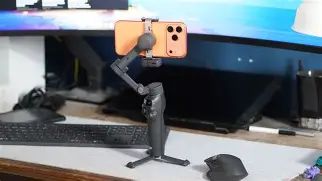
My testing routine was practical rather than lab-grade: I used the Motorola Edge 70 as my daily driver for six months — calls, navigation, social media, and all my casual photos. For video, I shot the same sequences handheld with the phone alone, and then again with the phone mounted on the DJI Osmo Mobile 8. I shot walking sequences, slow pans, short time-lapses, and low-light interiors. I also tested battery drain during long shooting days and evaluated how the software workflows felt when exporting and sharing content on the go.
Motorola Edge 70 — my hands-on review
In my day-to-day life the Edge 70 quickly became the phone I reached for. It strikes a practical balance: screen quality that makes editing short clips pleasant, competent cameras for daylight, and battery life that reliably lasted from morning until late evening on a heavy-use day.
What I liked
- Display and smoothness: The OLED felt bright and smooth for scrolling and light editing — 90–120Hz class smoothness that made scrubbing timelines and watching playback feel responsive.
- Everyday camera results: Photos straight out of the camera were pleasing in daylight — punchy but not oversaturated, good dynamic range in many scenes, and usable ultrawide shots for landscape or group photos.
- Battery life: I consistently finished full days of shooting and navigation without panic-charging. On days where I shot a lot of video I topped up before bed but wasn’t carrying a power bank constantly.
- Software experience: Motorola’s near-stock Android (My UX) stayed light and mostly free of bloat. The camera app is straightforward: quick modes and manual tweaks are accessible without hunting through menus.
- Ergonomics and feel: The phone sat well in my hand and the weight didn’t make long handheld recording sessions too fatiguing when paired with the Osmo Mobile 8.
What disappointed me
- Low-light photography: While usable, night shots occasionally showed noise and softer detail compared to flagship phones at higher price tiers. You’ll want to stabilize the phone (or use a gimbal) for night video to avoid visible grain and motion blur.
- No magic zoom: The telephoto reach is modest (if present in your unit); I found myself cropping rather than relying on a long-range zoom if I wanted tighter framing.
- Build vs flagship feel: The Edge 70 feels solid, but compared to higher-end devices the materials and finish are a little less premium. It’s not a complaint that affects functionality, but I noticed it when swapping between phones.
- Occasional autofocus hunting: In mixed-light indoor scenes the autofocus sometimes hunted slightly when panning, which became more noticeable in video — another reason I started using the gimbal’s stabilization and the phone’s manual focus tools.
DJI Osmo Mobile 8 — my hands-on review
The Osmo Mobile 8 is built for one thing: making handheld video look like it was filmed on rails. It’s compact, fast to unfold, and once you learn the app and balance expectations it becomes an incredibly productive tool for mobile creators.
What I liked
- Stabilization that genuinely helps: Walking shots, pans, and follow sequences look much more polished. For the kind of short-form video I make, the gimbal immediately improves perceived production value.
- Convenient mounting: The magnetic clamp and quick setup made it easy to swap between handheld phone use and gimbal shots. On most days I left my phone case on, but I did remove thicker cases for more secure mounting.
- Feature set: Active tracking, timelapse/hyperlapse, panorama modes, and a set of cinematic speed controls in the app made some shots feel effortless compared with handheld attempts.
- Portability: It folds down small and fits in a daypack pocket. I could throw it in my bag for weekend shoots without adding much bulk.
What disappointed me
- Dependency on the app: Some features only work through the DJI app, and on occasion the app’s Bluetooth connection would drop mid-session. Reconnecting was quick, but it interrupted a take once or twice.
- Balance with thicker cases: With heavy protective cases or accessories the magnetic clamp sometimes felt less secure. I learned to strip the case for long shoots, which is an annoyance if you like keeping your phone protected.
- Battery life in full-day shoots: The gimbal carried me through most production days, but on marathon shooting days I wished for more runtime — not a deal-breaker, but something to plan around.
Comparison table — at a glance
| Category | Motorola Edge 70 | DJI Osmo Mobile 8 |
|---|---|---|
| Primary purpose | Daily smartphone with capable cameras and smooth display | Dedicated 3-axis mobile gimbal for stabilized video |
| Best for | Everyday use, snapshots, casual video, editing on the go | Vlogs, walking shots, cinematic mobile video, creative time-lapses |
| Portability | Always with you — fits pocket | Compact and foldable but requires a pocket or bag |
| Stabilization | Electronic stabilization in-camera — helpful but limited | Superior mechanical stabilization — much smoother footage |
| Learning curve | Minimal — phone is familiar | Light to moderate — app features and modes require practice |
| Battery considerations | All-day phone battery with regular charging habits | Gimbal battery lasts many hours but may need topping up on long shoots |
| Value for creators | Great phone-to-camera balance for everyday content | Massive uplift in video quality; essential for smoother footage |
Pros & Cons — concise lists
Motorola Edge 70 — pros & cons
- Pros: Comfortable daily phone; bright, smooth display; good daylight cameras; long-ish battery life; clean Android interface.
- Cons: Low-light camera performance lags behind flagships; occasional autofocus hunting in video; not the most premium build.
DJI Osmo Mobile 8 — pros & cons
- Pros: Excellent mechanical stabilization; compact and foldable; useful creative modes (timelapse, ActiveTrack, panorama); immediate improvement to handheld video.
- Cons: App dependency and occasional connectivity hiccups; needs case removal for some phones; added bulk to carry.
Buying guide — which should you buy and why
Here’s how I decide which to recommend to different people based on how I used them.
Find top-rated Mobile Phones products at great prices.
Shop Amazon →
If you mostly use your phone for everyday tasks and occasional video
Buy the Motorola Edge 70. In my experience the Edge 70 is the better single purchase for someone who needs a solid phone that also takes good photos and light video. It replaces your current phone and improves everything you do daily. If you rarely shoot long-form walking footage, the phone’s electronic stabilization and steady hands will be enough for casual reels and social clips.
If you make a lot of handheld video, vlogs, or want cinematic motion
Buy the DJI Osmo Mobile 8. The gimbal produces an immediate, obvious improvement i…If you have to choose one and you’re a hybrid user (both daily phone and decent video)
Think about priority: do you need a new phone now? Buy the phone. Is your current phone fine but your videos look shaky and low-quality? Buy the gimbal. In my case I would have recommended the gimbal first if my existing phone already took acceptable photos. The Osmo Mobile 8 made more visible change in my videos than the Edge 70 did on its own.
If you can buy both
Buy both. That’s what I ended up doing, and I don’t regret it. The Edge 70 gives me the everyday convenience, and the Osmo Mobile 8 turns that convenience into cinematic results when I want them. Together they’re greater than the sum of their parts: the phone’s camera quality plus the gimbal’s stabilization produced the best daily content workflow I’ve had.
Practical tips from months of use
- Balance before you film: I learned that removing a thick case before mounting on the Osmo Mobile 8 saves frustration. It takes 30 seconds and prevents slips or auto-power balancing fights.
- Use the gimbal’s follow modes sparingly: ActiveTrack is great for single-subject shots but can be jittery if the subject crosses busy backgrounds. For predictable movement, pre-plan your pan and use the gimbal’s smooth follow.
- Lock exposure for cinematic consistency: On the Edge 70 I lock exposure and white balance when shooting cinematic scenes; it prevents the phone from re-exposing mid-pan and ruining a take.
- Charge both before long shoots: I keep a small power bank for phone top-ups and a spare USB cable for the gimbal. Running either device flat in the middle of an event is avoidable with a little prep.
- Keep the app updated: DJI’s app added useful new modes and bug fixes over the months I used it — periodically checking for updates fixed a couple of connection glitches I saw early on.
Workflow and sharing — how they fit into my content process
My workflow changed noticeably after I had both devices. I shoot quick clips on the Edge 70 throughout the day and import the best ones into the DJI app only when I need specialized gimbal shots. For editing I either use on-device apps for quick social posts or transfer to a laptop for longer edits. One thing I appreciated was that the Edge 70’s screen and processing made on-the-go trimming and color adjustments fast and accurate enough for me to post without a desktop in many cases.
Shop the latest Mobile Phones picks on Amazon.
View Offers →Final thoughts and recommendation
After several months of real-world use, my honest takeaway is practical: the Motorola Edge 70 is a dependable everyday phone with cameras that satisfy most users, while the DJI Osmo Mobile 8 is an investment that pays off quickly if you care about how your video moves. I was surprised by how much smoother shots looked with the Osmo — it fixed problems that no camera setting on the phone could fully eliminate. At the same time, I appreciated that the Edge 70 didn’t force me to compromise on battery life or daily usability while still improving my casual photography.
If you primarily want a better daily phone and only shoot the occasional clip, pick the Edge 70. If your focus is video quality and you already have an acceptable phone, the Osmo Mobile 8 will give you the fastest route to noticeably better footage. If you create content frequently and can afford both, pairing them gave me the most flexible, satisfying setup I’ve used for mobile work.
Either choice will improve your content in different ways — pick the one that matches how you create most often.